

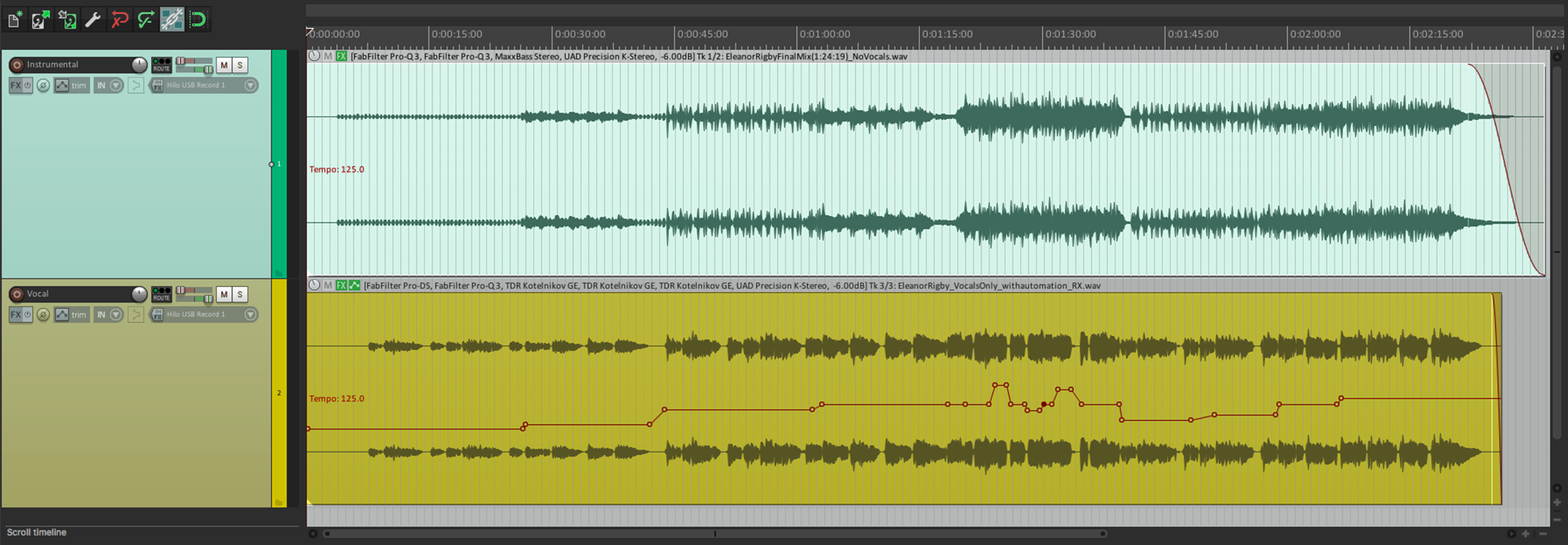



Ask five audio mastering engineers what they think of stem mastering and you’re likely to get five different answers. Some love the flexibility offered by working with stems and feel it allows them to get a better end result for their clients. Others feel that using stems comes dangerously close to mixing, and that it’s not their place to alter fundamental mix balances.
Others see it as a viable method to work around specific challenges, but not necessarily an approach that should be used by default. I want to be clear up front that I fall decidedly into the latter camp and as such, my advice comes from that perspective. Still, as a “centrist” position I believe it will be valuable to you when navigating the world of stem mastering.
In this piece you’ll learn:
When stems should and should not be used (in my humble opinion)
How many stems are enough, how many are too many
How to approach a stem mastering session, including specific techniques
Continue reading on iZotope Learn.
When it recently came time for me to choose a new music streaming service, I decided to go full nerd and compiled a spreadsheet that scores each service on twenty-five criteria. Then I added user-adjustable weighting for each criterion so that the overall scores reflect what’s important – or not – for different people. Of course, no spreadsheet is complete without charts to help visualize everything. My wife knew it was bad when she got home from work and I was excitedly ranting about a spreadsheet.
But here’s the good news: now that it’s done you can use it to help choose the music streaming service that’s best for you, and if you’re just curious about my take and how I got there I’ll share that too.